
 All Courses

 Upcoming Course Dates

 Professional Courses

 Academy & Short Courses

 IPM Courses

 PMI® Courses

 IPMA Courses

 Prince2 Courses

 Corporate Training

 Corporate Partnership

 University Partnership

 Strategic Partnership

 IPM Competency Pathway

 Growth Partner

 View More Academy Course
 IPMA Certification

 PMI® Certification
 IPM CPM Level 1
 IPM CPM Level 2
 IPM CPM Level 3
 IPM-AI
 IPM-Sustainable
 IPM-SCRUM
 IPM-PMO
 IPM-AGILE
 IPM-ASSOCIATE

 About IPM Hub

 IPM Membership

 EMEA Monthly Events

 Mentorship Programme

 IPM Jobs Portal

 All Insights & Resources

 Expert Insights

 Ebooks, Templates, and Toolkits

 Publish Your Work

 Who We Are

 Our Team & Faculty

 Global Advisory Board

 Become a Lecturer or Volunteer

 Become an Intern or Student Partner

 Speak to an Advisor


hamburger__close
Rolling wave planning is a planning technique in which near-term work is planned in full detail while later work is kept at a higher level, with detail added in waves as the project progresses and more is known. It accepts that complete information is rarely available at the start and that forcing precision onto distant work wastes effort and creates false certainty. This guide explains how rolling wave planning works, how it relates to progressive elaboration and agile sprints, how to apply it step by step, and when it is the right approach.
Advance your career with project scheduling training. Master scheduling management, prevent delays, and deliver projects on time with IPM.

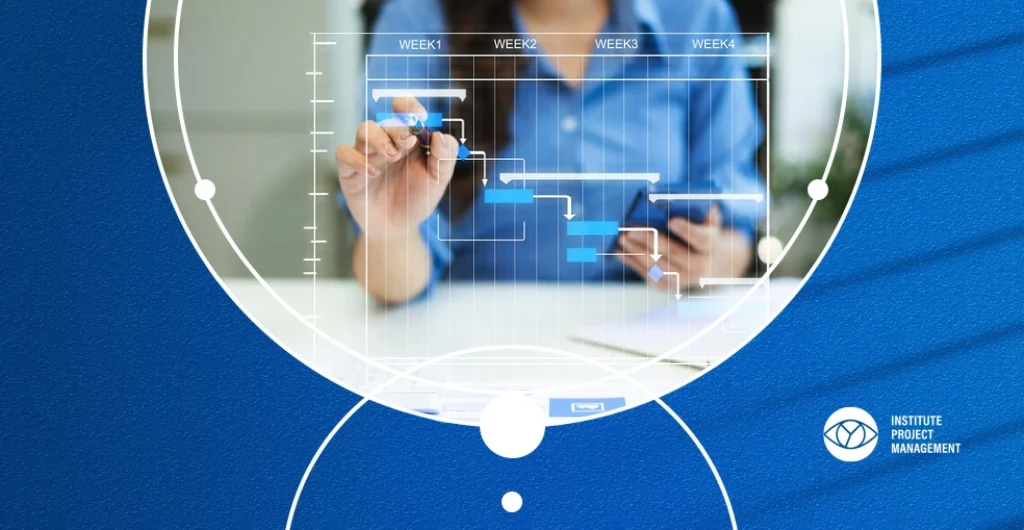
With rolling wave planning, the project manager plans the immediate work in detail and deliberately leaves later phases at summary level. As the project moves forward and information emerges, the next phase is broken down into detailed work, and the cycle repeats until the project closes. The result is a plan that becomes more precise over time, rather than a detailed long-range plan that is out of date soon after it is written.
In summary:
Rolling wave planning is an established part of professional practice. In the PMBOK Guide (Sixth Edition), it is listed as a technique in the Define Activities process of schedule management. It also fits naturally with stage-based methods such as PRINCE2, where each stage is planned in detail towards the end of the one before.
At any point, the work breakdown structure contains two kinds of entries:
As the current wave progresses, the project manager breaks the next set of planning packages down into detailed work packages, ideally before the current wave ends. The horizon of detailed planning therefore rolls forward through the project like a wave.
How long should each wave be? There is no fixed rule. Many teams detail the next one to three months, align waves with project phases or stage gates, or detail work up to the next major decision point. The right horizon is the period over which you can plan with reasonable confidence, which is usually shorter on volatile projects and longer on stable ones.
The terms are related but not identical.
Put simply, progressive elaboration is the principle and rolling wave planning is one of the main ways it is put into practice. IPM’s Smart Scheduling: Strategic Plans for On-Time Projects course covers both as part of building schedules that hold up in practice.
Rolling wave planning is often mistaken for agile sprint planning, but they are different.
| Aspect | Rolling wave planning | Agile sprint planning |
|---|---|---|
| What it is | A planning technique for detailing work progressively | Part of a specific framework, such as Scrum |
| Where it applies | Plan-driven, hybrid and agile projects | Agile teams working in sprints |
| Planning horizon | Flexible: weeks to months, often aligned to phases | Fixed time-box, usually one to four weeks |
| Output | Detailed work packages for the next wave | A sprint backlog and a commitment to a working increment |
Rolling wave planning does not need an agile framework. A multi-year infrastructure project run with a plan-driven approach can, and often should, use it when later phases are genuinely uncertain. For more on the differences between approaches, see our guides to sprint planning and waterfall vs agile.
Create a schedule that holds detailed work packages for the first wave and planning packages for later phases. The first wave should be detailed enough to execute without further planning. Planning packages should still carry rough order-of-magnitude durations, costs and key assumptions, so the overall plan can be baselined and reported against.
Explain to the sponsor and steering group where the boundary between detailed and summary planning sits and why. Agree when each future wave will be detailed, for example at a phase gate, a key milestone or a set point before the current wave ends. This is a governance decision as much as a planning one.
Use agreed triggers to start detailing the next wave in good time. Waiting until the current wave finishes creates gaps in the schedule and uncertainty for the team. Involve the people who will do the work, because they know most about what it involves.
Each elaboration brings new information. Update the risk register, refine estimates and check whether the new detail changes cost, duration or scope. If it does materially, raise a change request through change control rather than quietly absorbing the difference. IPM’s Project Risk Pro: Mitigate, Manage, Succeed course treats risk identification as a continuous activity that fits naturally with these wave reviews.
Keep a simple wave decision log: which planning packages were detailed, what triggered it, what assumptions were made and what risks were found. Then update stakeholders, so they see each wave as planned progress rather than a gap being filled.
Learn to identify, assess, and manage project risks effectively with hands-on strategies to ensure successful project outcomes.

A Dublin hospital is replacing its patient administration system over 18 months.
In month two, as design decisions firm up, the project manager and supplier break wave 2 into detailed work packages. The new detail shows that data migration will take four weeks longer than estimated, so a change request is raised and the sponsor approves a revised milestone. The schedule stays honest, and the board sees exactly where and why it changed.
IPM’s Scope Control: Define & Deliver What Matters course explores how rolling wave planning works alongside scope management where requirements are likely to change.
Gain essential skills in defining and controlling project scope to prevent scope creep and ensure timely, successful project delivery.

Rolling wave planning suits projects where the full scope cannot be defined at the start, where later phases depend on earlier decisions or outcomes, or where the project runs beyond the horizon in which detailed planning is reliable. Typical examples include:
It is less useful on short, well-defined projects where the full scope is known from day one.
Rolling wave planning makes plans more honest. By planning near-term work in detail and adding detail to later work as information emerges, it avoids false precision, reduces wasted effort and keeps risks visible. Used with clear triggers, change control and good stakeholder communication, it gives sponsors confidence while leaving room to adapt. Applying it well is part of the scheduling and planning competence developed in IPM CPM Level 1, which is assessed through training performance and practical assignments rather than a single exam. For the wider context, see our guide to what a project plan is.
Advance your career with project scheduling training. Master scheduling management, prevent delays, and deliver projects on time with IPM.
It is a technique in which near-term work is planned in full detail while later work is kept at summary level and detailed progressively as the project advances and more information becomes available.
Progressive elaboration is the general principle that plans become more detailed over time. Rolling wave planning is a specific technique that applies that principle to the schedule and work breakdown structure.
Not specifically. It works in plan-driven, hybrid and agile projects. Agile sprint planning is a related but separate practice tied to fixed time-boxes and a product backlog.
A planning package is a part of the work breakdown structure whose content is broadly known but which has not yet been broken down into detailed activities. It is detailed in a later wave.
Use it on longer or uncertain projects where later phases depend on decisions, approvals or results that are not yet known, such as infrastructure, research and digital transformation projects.